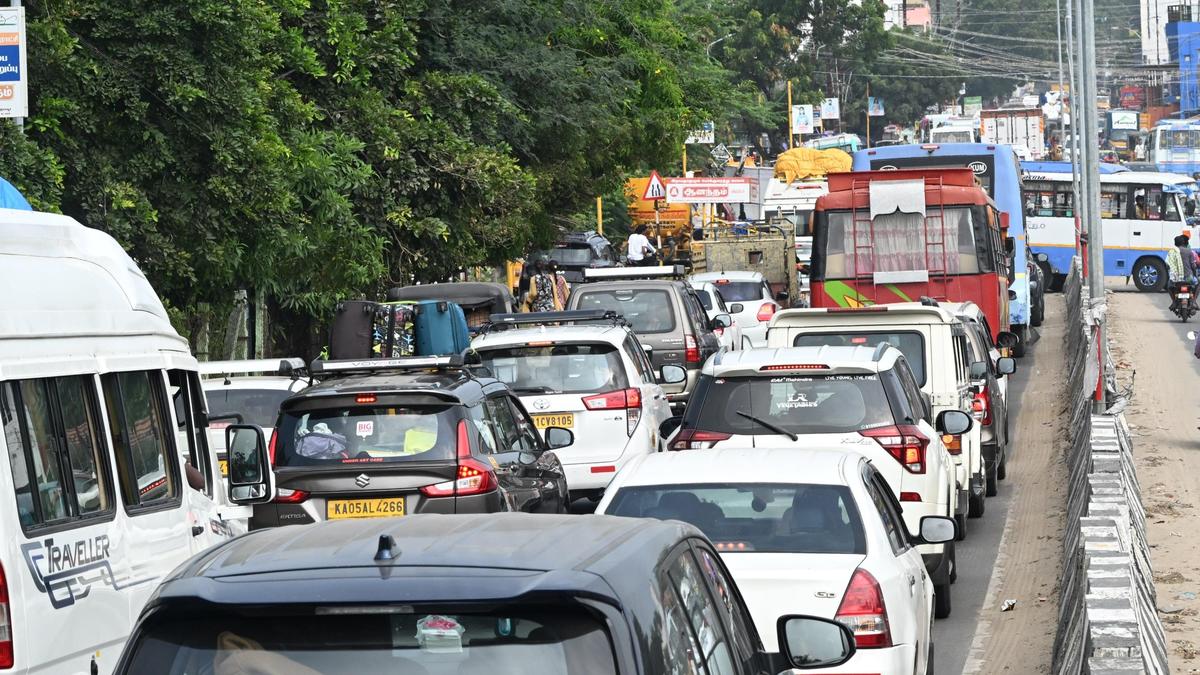
Following surge of tourists in the temple town Rameswaram road seen choked with vehicles.
| Photo Credit: L. BALACHANDAR
The proposed 6.4 km-stretch road connecting Pamban and Rameswaram through a different route is expected to serve as a vital alternative to the current route. It is anticipated that this new link will significantly alleviate traffic congestion on the national highways and reduce the bottleneck within town limits.
Local administration officials noted that the influx of both tourist and local traffic into the island town spiked dramatically following Christmas. “We recorded a peak of at least 4,500 four-wheelers in a single day,” an official stated.
“With the typical volume hovering around 1,000 vehicles, this four-fold surge effectively paralyzed movement throughout the temple town.”
Police officials deployed in the area admitted they had been overwhelmed by the recent vehicular surge. However, they expressed optimism regarding the new alternative road, noting that it would significantly ease the burden by diverting traffic and allowing for a smoother flow of movement.
A State Highways Department official stated that most of the land acquisition works were nearing completion, with the primary focus now shifting to the disbursement of fair compensation; once the final settlements for the acquisition are processed, the following stages of road construction would commence in full swing.
While the original road sufficed until a few years ago, it has been rendered inadequate by the rapid surge in private vehicle ownership and the increasing frequency of pilgrims visiting the Sri Ramanathaswamy Temple throughout the year.
“The surge is caused by a combination of Sabarimala pilgrims visiting on their return journey and tourists arriving for the winter holidays. This simultaneous influx has pushed the town’s footfall to record levels,” said the official.
However, within a year or so, the issue would be sorted out once the road construction works were over, he added.
Published – January 04, 2026 09:01 pm IST