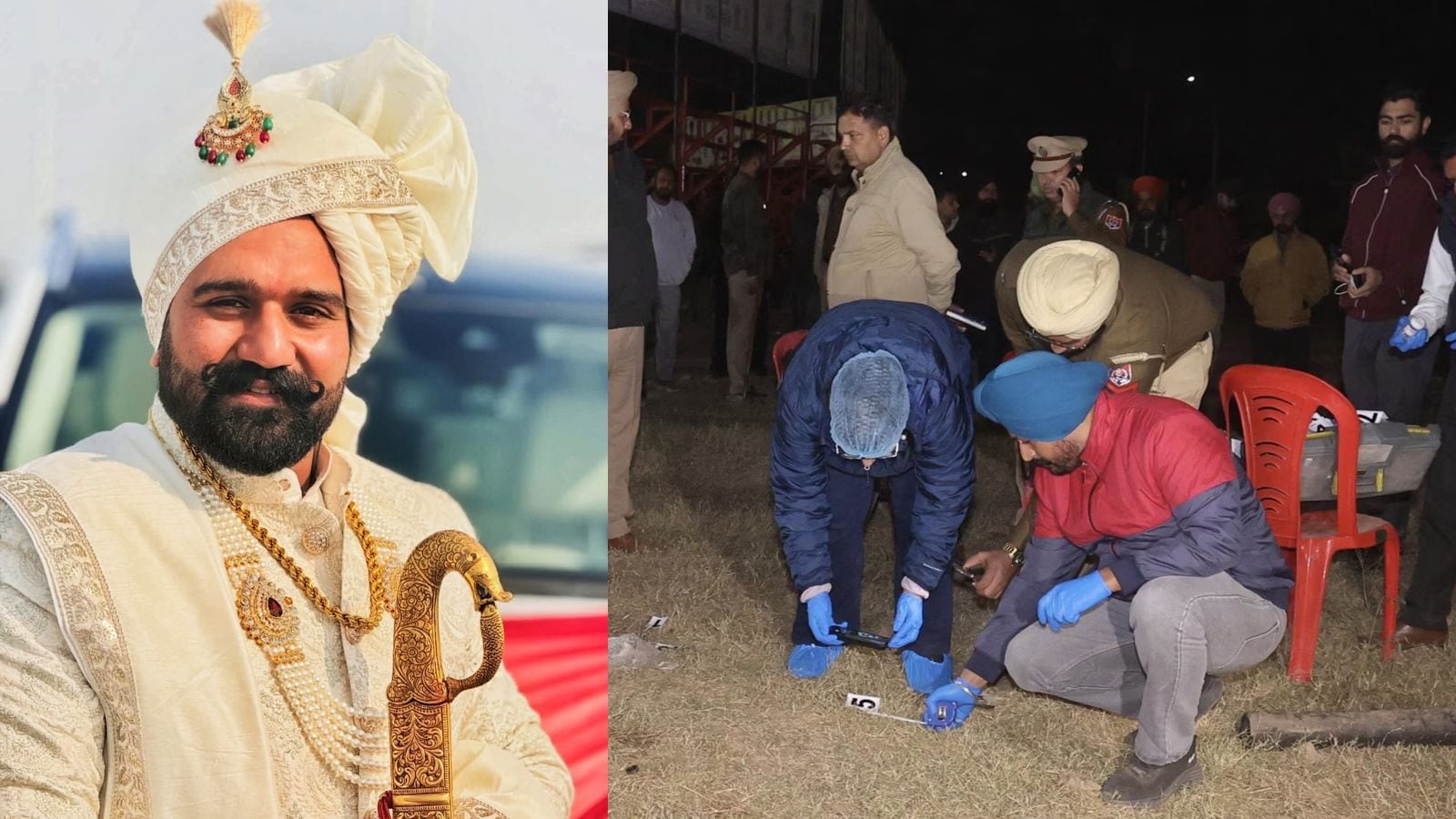
When kabaddi promoter Kanwar Digvijay Singh, better known as ‘Rana Balachauria’ in the sport’s circles, was shot dead at a packed tournament in Mohali’s Sohana on December 15, the bullets pierced another hole into the myth that Punjab’s favourite rural sport still belonged to the soil.
Balachauria’s killing, by shooters posing as fans, was another chapter in the rise of kabaddi as a Rs 100-crore industry, powered by cash prizes, sponsorships and tournaments that have gone international, where every raid and tackle is shadowed by crores – often involving bets, and gangs.
“It’s about turf, not tradition,” said a police officer probing the Balachauria case. “Each gang wants dominance over the circuit, where money, betting and influence circulate freely.”
Among the names police believe are involved are the Bambiha group and the Lawrence Bishnoi network. Even in the 2022 murder of Punjabi singer Sidhu Moosewala, the suspects were found to have links with some kabaddi promoters.
‘Principal’ Sarwan Singh, who has chronicled six decades of the sport and authored five books on it, points to the soaring budget for tournaments – Rs 1 lakh to Rs 40 lakh to those held in Punjab, and several times more for those abroad. “In England, a tournament can cost £100,000. In Toronto, up to $400,000 to $500,000,” he said. Commentators can earn between Rs 5,000 and 50,000 a day.
The cash flow is also evident in the Pro Kabaddi League. In June 2025, franchises spent nearly Rs 38 crore purchasing 121 players in one auction. The highest bid of Rs 2.23 crore was for Iranian defender Mohammadreza Shadloui.
DIG (Anti-Gangster Task Force) Gurmeet Chauhan said that it were diaspora-driven tournaments, particularly in Doaba, which transformed the game. “NRIs brought big money into kabaddi in the early 2000s,” he said.
Story continues below this ad
While the Jagdish Bhola drug racket in which several accused were NRI kabaddi promoters, former players, or tournament organisers cast a long shadow – during the 2013-14 peak period for NRI-sponsored tournaments in Doaba, many overseas organisers stayed away – Chauhan said a way around was found. “Money still flowed, now through murkier routes.”
Simultaneously, the Internet sealed kabaddi’s popularity across the diaspora. Over two dozen Punjabi YouTube channels such as Kabaddi365, JUS Live Kabaddi and Punjab Kabaddi TV stream rural matches to millions. Kabaddi365 alone has more than 2.3 million subscribers.
Said a commentator: “You can imagine the kind of money flowing when streaming rights and ads fetch lakhs per event. Everyone, from players to camera crews, makes more than most realise.”
Blood on the court
It is in the past three years that kabaddi has seen violent incidents linked to the sport and its changing nature.
Story continues below this ad
In March 2022, international player Sandeep Nangal Ambian was gunned down during a tournament in Jalandhar. In January 2025, the Punjab Police arrested six members of the Kaushal Chaudhary gang, including two shooters, linking them to both the Nambian case and another kabaddi-related killing.
In October 2025, a 25-year-old player, Tejpal Singh, was shot in Jagraon during an altercation. Next month, another player, Gurvinder Singh, was killed in Samrala, with the Bishnoi gang claiming responsibility on social media.
In the Balachauria killing, police arrested alleged mastermind Aishdeep Singh, reportedly in the process of fleeing abroad, and killed accused Harpinder Singh Middu in an encounter. Key shooters, however, remain free.
Betting rings and match-fixing
The killings are linked directly to the rising stakes, and a flourishing underground betting economy, all the way from Pro Kabaddi League to circle-style matches in dusty Punjab fields. “Players whisper about pressure to throw matches or fix raids, and about threats by bookies linked to gangs,” a police officer said.
Story continues below this ad
Investigators say many killings stem from feuds over tournament rights, specifically who gets to host which event and under whose banner. Each killing shifts the balance of power, sometimes altering the control of entire circuits.
Apps and encrypted chats are used to manage wagers and payments across states and borders, making cracking the racket difficult. “We know it exists, but it’s almost impossible to prove,” said another officer.
According to police, often big players themselves are gang proxies, investing in teams and using match results to settle scores or debts. “Gangsters now dictate everything, from sponsorships to celebrity appearances,” said an investigator. “They fix how much prize money is shown on paper, and how much changes hands off it.”
A police officer points out that kabaddi is a way for gangsters to “build their image”. “They want rural youth to see them as patrons of sport, not just criminals.”
Story continues below this ad
With the popularity of kabaddi drawing in sponsorships for the tournaments – which provide a lucrative conduit to the rural market – gangs also use them as fronts for money laundering, DIG Chauhan said.
At the Sohana tournament, where Balachauria was killed, for example, a tractor was among the prizes on offer. “Even small local events witness crores in informal sponsorships,” said coach Harpreet Singh Baba.
The migration link
Given its growing footprint abroad, kabaddi has also become a migration pipeline for Punjabi youths. In 2011, Sarwan Singh said, over a thousand individuals claiming to be kabaddi players travelled abroad, often on sports visas. All of them were headed West – 600 to North America and 400 to Europe. “Many never came back.”
“Kabaddi clubs mushroom as fronts for kabootarbaazi, or illegal immigration,” Singh said, adding that there are 60-70 academies in Punjab which train players who hope solely to reach Canada or the UK through kabaddi tournaments.
Story continues below this ad
Veterans warn that without regulation, kabaddi could collapse under its own weight.
Saying it was no longer the game they grew up with, coach Harpreet Baba said: “In the 2000s, federations ran the show. Today, there are hundreds of private clubs, mostly unregistered. Matches go on late into the night, without oversight.”
Kabaddi federations abroad recently called for a one-year freeze on tournaments to restore discipline, he points out. “But without state regulation and police watch, that won’t help.”
Sarwan Singh said: “Kabaddi should have mandatory dope tests, day-time matches and government oversight. Otherwise, big money and muscle will keep running it.”