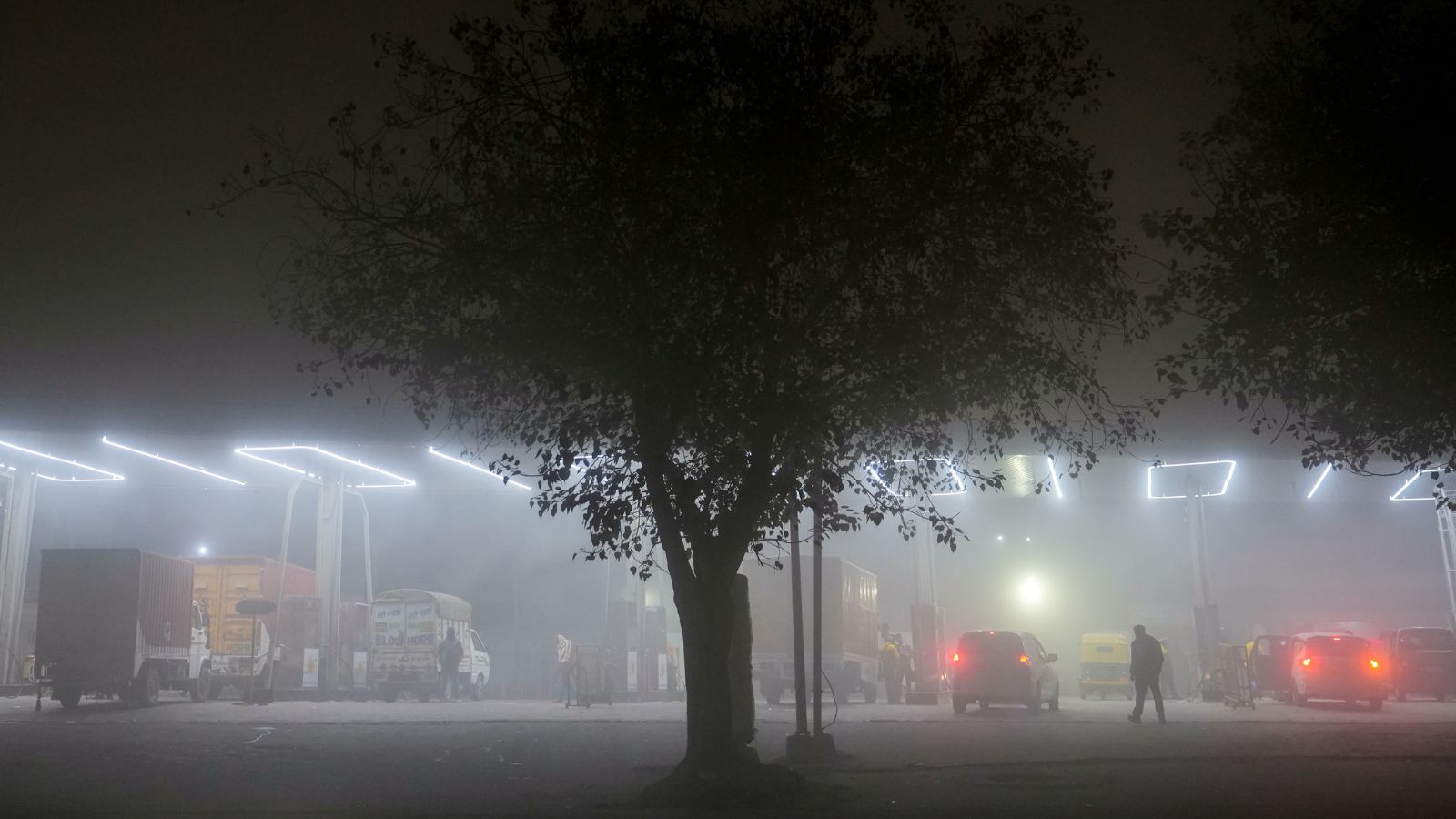
With an eye on curbing vehicular emissions, 7,789 end-of-life vehicles (ELVs) have been impounded in Delhi since October 1, 2025, for violating anti-pollution restrictions imposed under Graded Response Action Plan (GRAP) III and IV.
Following directions from the National Green Tribunal (NGT) and the Supreme Court, in December 2021, the Transport department had announced that all diesel and petrol vehicles that had completed 10 and 15 years, respectively, would be deregistered.
Highlighting that vehicular emissions account for 25% to 30 % of Delhi’s air pollution, the BJP government had on October 1 last year launched a drive against all air-polluting activities, including vehicles.
Apart from ELVs, about 12.08 lakh vehicles were also challaned for causing pollution since October 1. 2025. On January 1 alone, 6,596 vehicles were issued challans, official data showed. A penalty of Rs 10,000 is imposed on a vehicle running without a Pollution Under Control Certificate (PUCC) in Delhi.
Last month, the Transport department had directed all petrol pumps to stop giving fuel to vehicles that do not have a valid PUCC. According to data, on an average, over 10,000 vehicles are being issued challans daily in the Capital.The Transport department had started the process to deregister ELVs in January 2022. So far, over 55 lakh ELVs have been deregistered in Delhi. As per government data, while 22,397 old vehicles were impounded in 2023, 39,273 were impounded and scrapped in 2024.
After the BJP government came to power in Delhi in February, it rationalised norms under the ‘Guidelines for Handling End of Life Vehicles in Public Places of Delhi, 2024’, and lifted the mandatory one-year limit to seek a no-objection certificate to move ELVs to other states that do not have such curbs in place.Following this, the Commission for Air Quality Management (CAQM) – the Centre’s anti-pollution watchdog for Delhi-NCR – rolled out a plan to ban fuel supply to ELVs, effective from July 1 last year. However, citing “critical operational and infrastructural challenges”, the Delhi government asked CAQM to put the ban “on hold with immediate effect”.
The CAQM went on to announce a halt to the impounding of ELVs.
Story continues below this ad
Last month, the Supreme Court also modified its previous order barring coercive action against ELVs and clarified that action could be taken against models below BS-IV.
In a PMO meeting last October, it was flagged that vehicular emissions remain a key concern in NCR, which has nearly 2.97 crore vehicles, growing at 7% annually. Delhi, despite occupying just 2.7% of the NCR’s area, holds over half of the vehicle stock.
Delhi-NCR comprises 67% two-wheelers and 26% four-wheelers across the country, with 37% of the total vehicle stock still BS-I and BS-III models.